Room for growth
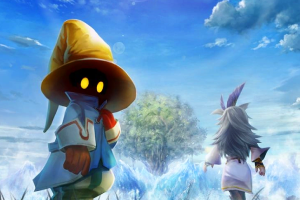
In act 2 of OPERA OMNIA, Kuja lashes out upon learning that he has actually been brought back to life and isn't the walking dead as he'd believed. His desire to prove that he's more than his fate backfires when he only manages to summon the Iifa Tree, a reminder of Garland's shackles, with his will in the World of Respite. The revelation that he's forever trapped in this loop breaks him, and he tries to cope by projecting his anguish onto Vivi. His mien takes on such a drastic turn that even the dark manikins, who don't understand emotions as vessels for lost memories, remark that something is wrong.
Trapped and upset, Kuja relapses. He seeks the validation of seeing someone else experience the pain of being forsaken by forcing Vivi through torturous scenarios and spells. This thinly veiled attempt at understanding in twisted solidarity fails, leading him to feel even more alone when Zidane's party defies his bleak expectations.
Aerith: Something's wrong with Kuja . . . His eyes are different than that time he helped us.
Kuja: I've had enough! I've always played the clown! Trying to escape the gods and my fate, but failing again and again! I tire of this play! I tire of this stage and this role and . . . everyone!
Kuja calms after Vivi reaches out to him in understanding of their mutual fear of death. While he rejects the claim that "there's still a place for [him], even after life ends" on the basis that he has nobody whereas Vivi has friends, he leaves to take responsibility for his mistakes with full awareness that doing so might kill him. The party come to the realization that what Kuja needs is a reason to live and urge him to make use of his limited time to the fullest. Their unexpected kindness, where Garnet makes the enormous gesture of embracing him as a "citizen of Gaia," thereby removing his othered status, moves Kuja insofar that his soul becomes devoid of the hatred Hilda once saw in a moment that directly parallels Zidane's "Not Alone" sequence.
Nobody has forgotten Kuja's crimes. He neither receives forgiveness nor asks for it, knowing that he deserves punishment. Kuja's story is one of understanding and forward movement. He, Zidane, and Vivi all recognize something meaningful in each other, and that's enough for the rest of the party to rise up in solidarity. There's no question that Kuja made the wrong choice in the past, but he now stands before them, trying to do what's right. His new lease on life is still limited, and he'll soon pass by whatever means Garland intended for him; even so, he can live beyond what fate demanded of him as a defective angel of death.
Of course, such a development doesn't happen overnight. Kuja retreats from the spotlight for a time, returning much later to assist the gods with Golbez when many of Spiritus' warriors are in disarray. At this point, he's still pondering his next course of action from day to day: Although his hatred toward his erstwhile enemies is no more, his self-reproach lingers, preventing him from enjoying life on his own. According to Bartz, he possesses a dour countenance. Reclusion doesn't serve him, and he finally arrives at a tentative solution in the company of Laguna and the disciplinary committee.
Laguna's persistent yet considerate nature in tandem with Raijin's sincerity prove to be a normalizing force for Kuja, who effects a sense of belonging by referring to Gaia as his "home world" as he chats openly about his noble hobbies. Rather than dwell on his past as an angel of death, they discuss the present and contemplate forward-thinking questions about their individual presence in the gods' world. From the eyes of Golbez, Kuja seems to be enjoying himself and healing through their kindness while also maturing through their worldly input whenever he says too much.
Kuja's doubts begin to surface when Laguna and Raijin tell him that they're glad to have met him. Because Laguna is so simple by nature and they lack a complicated history to muddle the waters, he finds it difficult to think him a liar. In fact, Kuja is the first to consider the idea of friendship; however, he's just as quick to dismiss that yearning for "self-satisfaction." He knows that connection is the answer to his existential conundrum, but can't in good conscience pursue it after all he's done.
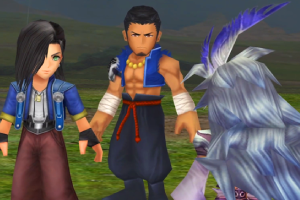
His self-loathing is soon challenged by Laguna, who casually refers to him as a friend before handing him a fruit. Uncomprehending of this gesture, he nevertheless takes the fruit with him and gives it a taste in thoughtful solitude. In the company of no one but himself, he's able to admit that he likes it after lying through his teeth nonstop to the others about having fun or being worried.
At the tender age of twenty-four, Kuja is a functionally intelligent and cultured adult. He's relinquished his hatred and mingles with familiar faces when the opportunity arises. At the same time, he still has much to learn. He can't take a compliment, because he's yet to learn how to love himself—but there are those who care about him and are willing to reach out to him. After a lifetime of rejection, that's as good a start as any.